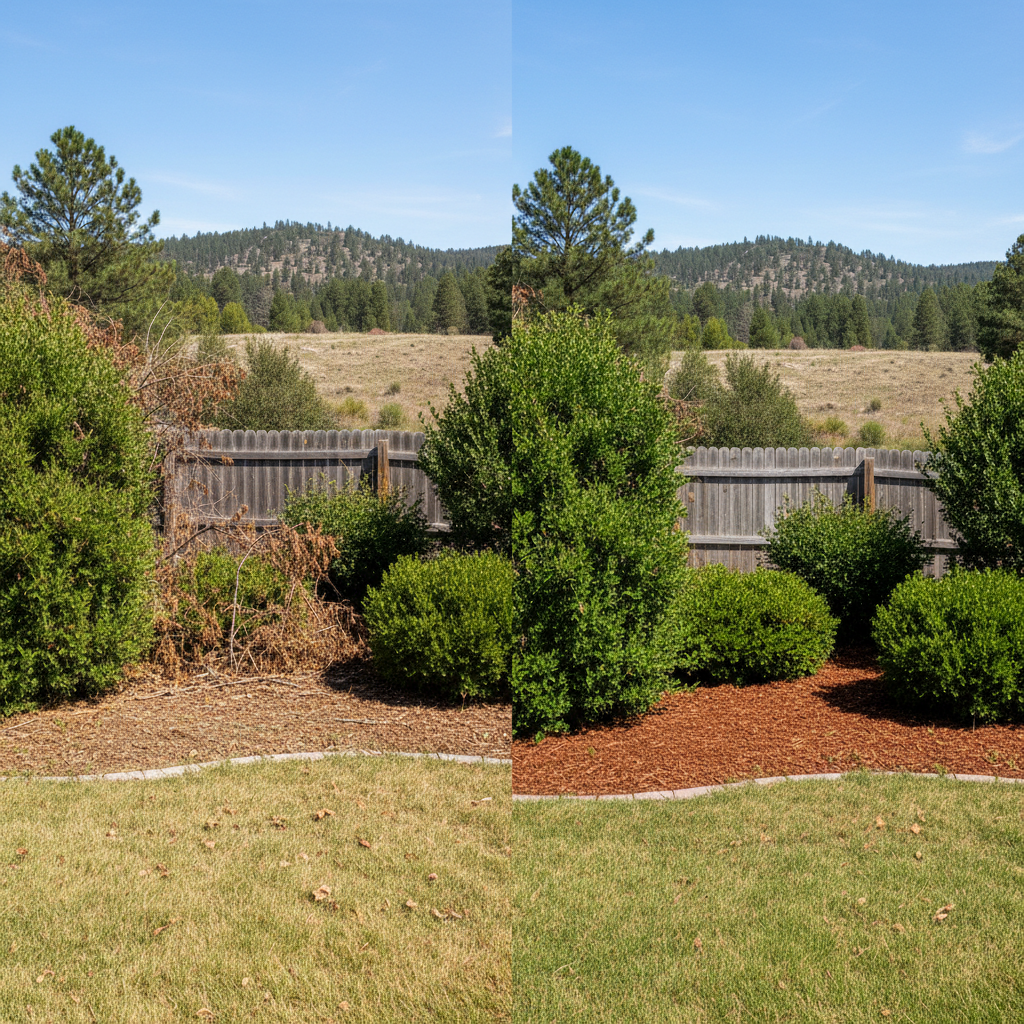
You've got bushes and shrubs around your place, right? Everyone in Hot Springs does. And eventually, they get a little shaggy, a little overgrown, or just plain messy. So, you gotta trim them. But how?
There are two main ways folks go about it, and I see both all the time. One's called shearing, and the other's selective pruning. People often think they're the same thing, or that one's just 'better' than the other. That's not really true. They've both got their place, and knowing the difference can save you headaches and cash in the long run. Let's get into it.
Shearing: The Quick & Uniform Look
Shearing is probably what most people picture when they think about trimming a hedge. It's when you grab a hedge trimmer – those long, often electric or gas-powered tools – and just buzz the outside of the plant. You're aiming for a nice, clean, uniform shape, usually a square, a rectangle, or sometimes even a globe. Think of those perfectly manicured hedges you see in fancy gardens.
The Good Stuff About Shearing:
- Speed: Man, it's fast. You can knock out a lot of shrubs in a short amount of time. If you've got a long row of hedges, this is the quickest way to get them looking tidy.
- Cost: Since it's fast, it's usually cheaper. Less labor time means less money out of your pocket.
- Appearance: For certain styles, it looks fantastic. If you want a crisp, formal look, shearing delivers. It's great for creating boundaries or a neat backdrop.
The Downside of Shearing:
- Plant Health: This is where shearing can get tricky. When you constantly shear the outside of a plant, you're cutting off all the new growth. This makes a dense layer of foliage on the outside, but the inside of the plant can get sparse, woody, and receive less sunlight. It's like a plant with a really thick haircut that never lets light get to its scalp, you know? Over time, this can weaken the plant, make it more vulnerable to disease, and reduce flowering or fruiting.
- Durability: Those dense outer layers can get really heavy, especially after a good rain or a heavy snow. I've seen sheared shrubs split open in winter storms because the outer shell was too thick and the inner structure wasn't strong enough.
- Maintenance: You'll need to shear more often. That outer growth comes back quickly, so if you want to keep that crisp look, you're trimming every few weeks or months during the growing season.
Selective Pruning: The Natural & Healthy Approach
Selective pruning, sometimes called hand pruning or structural pruning, is a more thoughtful process. Instead of just buzzing the outside, you're looking at each branch and making cuts strategically. You remove dead, diseased, or crossing branches, thin out dense areas, and encourage healthy growth from the inside out. You shape the plant by understanding its natural growth habit.
The Good Stuff About Selective Pruning:
- Plant Health: This is the biggest win. Selective pruning helps strong, healthy growth. By removing weak or crossing branches, you get better air circulation and light penetration, which cuts down on disease risk. You're encouraging the plant to grow naturally and robustly.
- Durability: A well-pruned shrub has a stronger internal structure. It's less likely to split under snow load or heavy winds because the weight is distributed better and the branches are healthier. This is a big deal around here, especially with our unpredictable Hot Springs winters.
- Appearance: While not as 'formal' as shearing, selective pruning gives a more natural, graceful look. It really brings out the plant's inherent beauty, often leading to more flowers and fruit. It looks less like a green box and more like a living plant.
- Maintenance: You usually don't need to prune as often. Because you're guiding the plant's growth, it holds its shape longer, meaning fewer trips with the pruners.
The Downside of Selective Pruning:
- Time: It takes longer. You're making individual cuts, not just running a machine over the surface.
- Cost: Since it takes more time and requires more skill, it's generally more expensive upfront.
- Skill: It takes an eye for the plant and some knowledge of how it grows. If you don't know what you're doing, you can actually harm the plant.
So, Which One for Your Hot Springs Yard?
Alright, so you're in Hot Springs. What's the right call?
For most homeowners, especially with the weather we get – those heavy snows, the strong winds that whip through the Black Hills – I'm going to lean towards selective pruning for the majority of your shrubs and bushes. It just makes for a healthier, more resilient plant. You want your plants to be able to stand up to a Foot of Snow Hill blizzard, not collapse under it.
Think about the soil we have here too. Sometimes it's pretty rocky, sometimes it's heavy clay. Healthy root systems and strong plant structures, which selective pruning helps create, are going to help your plants thrive in whatever conditions they're dealing with.
Now, if you have a very specific, formal hedge that you absolutely want to keep looking like a perfect green wall, and you're committed to the more frequent maintenance, then shearing can work. But even then, I'd recommend doing a rejuvenation prune every few years to open it up and let some light in.
At New Look Tree, we do both. We'll talk with you about your goals, look at your plants, and recommend the best approach. We want your landscape to look good, sure, but more importantly, we want your plants to be healthy and strong for years to come. Don't just whack at your bushes; give 'em the right kind of trim.