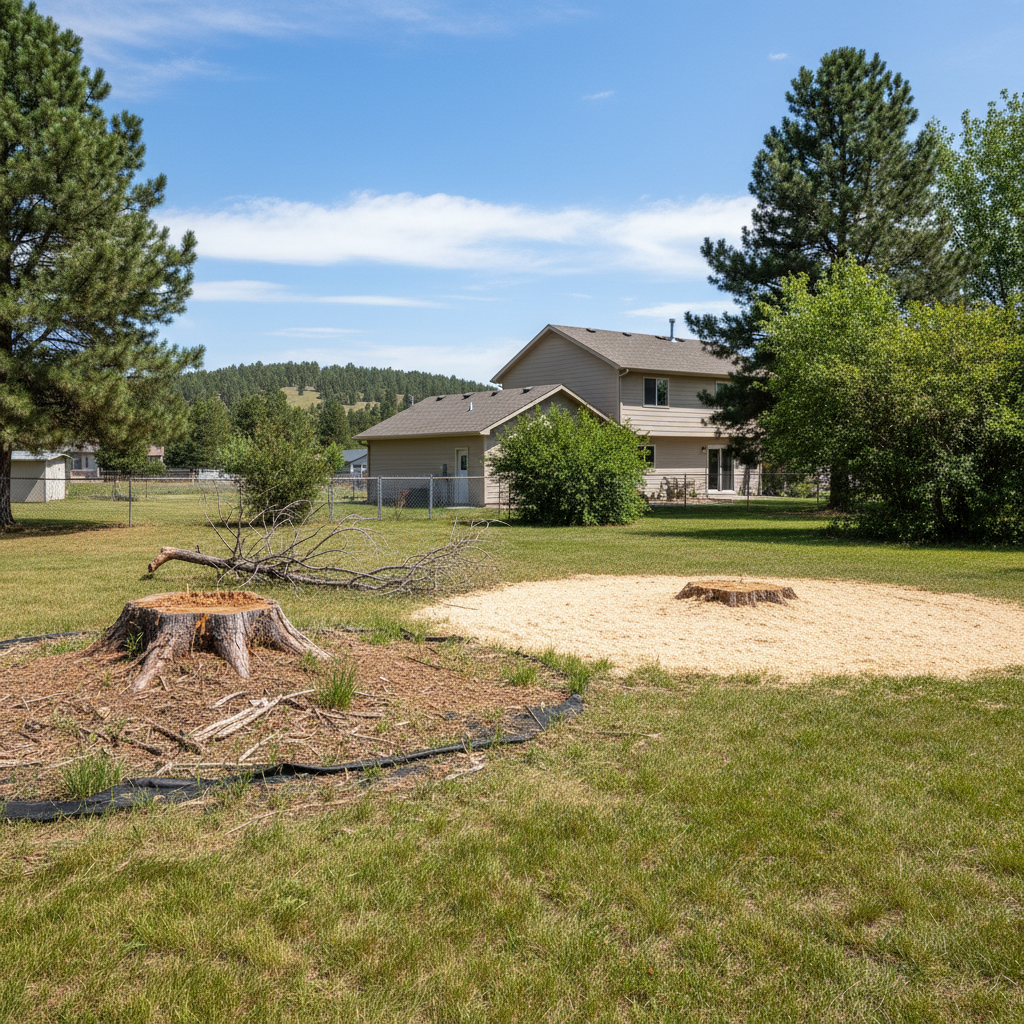
Alright, let's talk about stumps. You've probably had a tree taken down, or maybe one just fell in a storm, and now you're stuck with this big, ugly, trip-hazard of a stump sitting there. What's next? For most folks in Hot Springs, it usually comes down to two main choices: stump grinding or getting the whole thing removed. They sound kind of alike, but trust me, they're totally different animals. And picking the right one for your yard? That could save you a real headache and some cash.
Stump Grinding: The Quick & Easy Fix
This is probably what most people picture when they say they want a stump gone. And honestly, it works great for a lot of situations. When we do stump grinding, we use a special machine with a big, spinning cutting wheel. That wheel just chips away at the stump, turning it into wood chips and dirt. We usually go several inches, sometimes even a foot or more, below the ground's surface, depending on what you're planning for that spot afterward.
The Good Stuff About Grinding:
- Cost: Generally, grinding costs less than taking the whole stump out. It takes less time, less work, and smaller equipment. If your budget is the main concern, this is usually your best bet.
- Speed: We can often grind a stump out in an hour or two, even quicker for smaller ones. It's a fast process, so you won't have a drawn-out project on your hands.
- Less Mess: The grinding machine is pretty compact. It won't tear up your whole yard. We just focus on the stump itself, leaving you with a pile of wood chips.
- Makes Your Soil Better: Those wood chips and shavings we leave behind? They're organic material. You can spread them around your garden beds or mix them right into the soil. It's like a natural mulch, really.
The Not-So-Good Stuff About Grinding:
- Roots Stay Put: This is the big one, folks. While the stump you can see disappears, the main root ball and all those side roots are still underground. They'll break down eventually, but that can take years, maybe even decades.
- Could Regrow: If the tree was a type that likes to sprout (like some of the cottonwoods or aspens we often see around here), those roots might send up new shoots. You'll need to keep an eye on them and trim them back if they pop up.
- Limited Space Use: If you're hoping to plant a new tree exactly where the old one stood, grinding might not be enough. The remaining roots can get in the way of the new tree's growth, and the decaying wood chips can mess with the soil's nutrients. You'd have to dig out a good amount of the grindings and replace them with fresh soil.
Full Stump Removal: A Clean Slate
When I talk about full stump removal, I mean just that: we're not just grinding the visible part. We're digging out the entire stump, including the main root ball. This usually means using heavy machinery like an excavator, or sometimes a lot of manual labor for smaller stumps in tight spots.
Why You Might Want Full Removal:
- Completely Gone: No stump, no roots, zero chance of regrowth. The whole thing vanishes.
- Instant Space: You get a completely clear area. Want to plant a new tree? Build a deck? Put in a patio? You've got a clean slate, totally free of any underground obstacles from the old tree. This is super important in places like some of the older neighborhoods in Hot Springs, where properties are smaller and every square foot counts, you know?
- No Decay Worries: With no roots left to rot, you won't have to stress about future sinkholes or the ground settling as old wood breaks down.
- Pest Control: Decaying wood can attract pests like carpenter ants or termites. Getting rid of the whole stump eliminates that potential breeding ground.
The Downsides of Full Removal:
- Cost: This is almost always more expensive than grinding. More time, more labor, bigger equipment, and then there's the disposal of the massive stump and root ball.
- Yard Mess: An excavator makes a much bigger mess than a stump grinder. You're going to end up with a significant hole in your yard, and the surrounding area can get pretty churned up. We'll fill the hole, but you'll probably need to reseed or resod.
- Time: It takes longer to dig out and remove a whole stump compared to just grinding it.
- Soil Compaction: Heavy machinery can compact your soil, which isn't ideal for future planting in the immediate area.
So, What Should You Do?
It really boils down to what you plan to do with that spot and what your budget looks like. Here's how I usually advise people:
- If you just want the stump gone and don't plan on planting anything big there soon, or if you're on a tighter budget: Stump grinding is probably your best bet. It's efficient, affordable, and gets rid of that eyesore. You'll have some wood chips to deal with, but those can actually be pretty useful.
- If you're planning to replant a new tree, build something, or want absolutely no trace of the old tree: Go for full stump removal. It's more of an investment upfront, but you get a completely clear area without any future headaches from old roots or decay. This is especially true if you're looking to put in a new foundation or extensive landscaping, as those old roots can cause problems down the line.
We've done both for years here at New Look Tree, and we've seen all sorts of situations. The important thing is to really think about what you want for your yard in the long run. Give us a call, and we can come out, take a look at your specific stump, and talk through the options right there on your property. We'll help you figure out the best approach for your Hot Springs home.