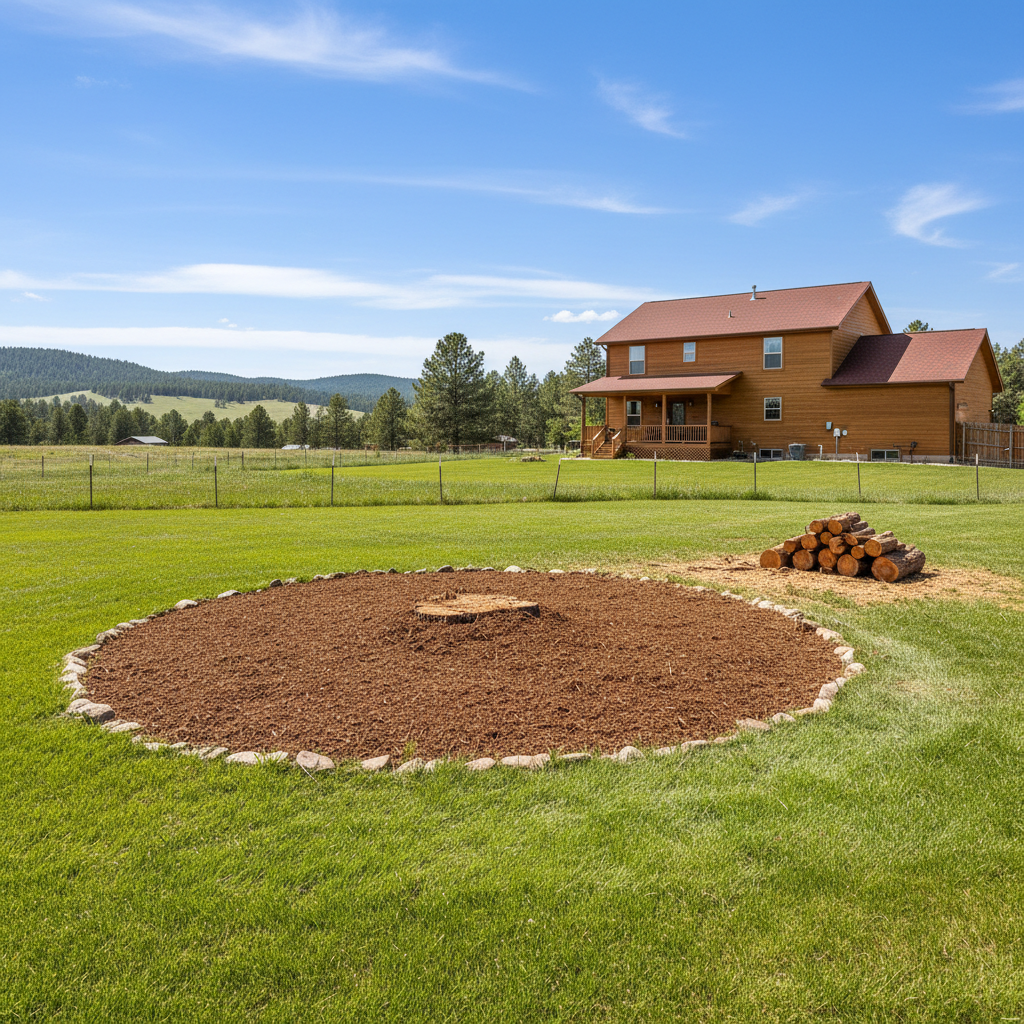
So, you had a tree removed from your Hot Springs property. Maybe it was a very large Ponderosa pine that was too close to your house, or it was an old cottonwood tree that was just dying. Whatever the reason, taking out a big tree is a big job. But the work is not always finished when the tree is gone. You need to think about what happens next, especially with the unique South Dakota weather patterns we have in Hot Springs.
Extending the Life of the Work: What to Do After Tree Removal in Hot Springs
When New Look Tree takes down a tree, we make sure it is done correctly. But what you do after the tree removal really helps make that investment last for your Hot Springs home. The most important thing is dealing with the tree stump and the ground around it.
- Stump Grinding is Key: If you did not choose stump grinding right away, I highly recommend stump grinding. Just cutting a tree down leaves a stump, and that stump can still be alive. The stump will try to send up new shoots, sometimes for many years. Grinding the stump down below ground level gets rid of that eyesore. More importantly, stump grinding removes the bulk of the living tissue that wants to regrow.
- Fill and Grade Immediately: Once the stump is ground, you will have a hole. Do not leave the hole open. Fill the hole with good, nutrient-rich soil as soon as you can. This prevents erosion, which can be a real problem around Hot Springs, especially with our heavy spring rains and the clay-heavy soils we often see in the foothills around Hot Springs. Pack that soil down firmly. You might need to add more soil as it settles over time.
- Consider New Planting or Ground Cover: To further prevent erosion and help stabilize the soil, think about planting something new. Native grasses like switchgrass or Indiangrass, or even some drought-tolerant shrubs, are excellent for erosion control because they have deep root systems. This also helps restore the soil's structure, which can get compacted from the tree removal equipment. For Hot Springs homes, this is an important step after tree removal.
- Manage Drainage: A big tree soaks up a lot of water. Once the tree is gone, the drainage patterns in your yard can change. Keep an eye out for new puddles or areas where water collects, especially near your foundation. You might need to adjust your landscaping or drainage to prevent water issues for your Hot Springs property.
Regular Maintenance: Keeping the Area Problem-Free in Hot Springs
Even after the initial cleanup from tree removal, a little ongoing attention goes a long way for your Hot Springs property.
- Watch for Regrowth: Some tree species, especially fast-growing deciduous ones like willows, elms, cottonwoods, or even some ash trees, are known for sending up suckers or sprouts from their remaining root systems. If you see these, cut them back immediately. Consistently removing them starves the roots of energy and will eventually kill them off. This is important for tree removal areas in Hot Springs.
- Monitor Soil Health: Trees contribute a lot to soil health. Without them, you might see changes. Adding compost or mulch (you can even use the wood chips from the stump grinding!) can help keep the soil healthy and suppress weeds. Maintaining good soil health is important for any property in Hot Springs.
- Keep an Eye on Surrounding Plants: The removed tree likely provided shade and shelter for other plants. Without the tree, some plants might struggle with more sun exposure or wind. Adjust watering or consider adding new, more sun-tolerant plants if needed for your Hot Springs landscape.
Warning Signs of Problems After Tree Removal
You are not out of the woods just because the tree is gone. Here are a few things to watch for after tree removal in Hot Springs:
- Persistent Sprouts: A few sprouts here and there are normal, but if you are constantly battling a forest of new growth from the old stump or roots, that is a sign the root system is still very active. The root system then needs more aggressive treatment.
- Soil Erosion: If you notice soil washing away, exposed roots, or uneven ground where the tree used to be, that is a clear sign of erosion. This can be a big deal, especially on slopes, and can impact foundations or other landscaping. Erosion can be a problem in Hot Springs, especially with our local soils.
- Pest or Disease Activity: While the tree is gone, the decaying roots can sometimes attract pests or fungi. Keep an eye out for unusual insect activity or fungal growth in the area. South Dakota has its share of tree pests like Mountain Pine Beetles and Emerald Ash Borers, and diseases like Dutch Elm Disease or Oak Wilt. Even though the main tree is gone, these issues can sometimes linger or affect nearby trees in Hot Springs.
- Uneven Settling: As the root system decays, it can leave voids in the soil. This can lead to uneven settling of the ground, or even cracks in nearby patios or driveways. Uneven settling can be a concern for Hot Springs homeowners.
When to Call a Professional for Tree Removal Follow-Up
Sometimes, it is best to bring in the professionals for tree removal follow-up. Do not hesitate if:
- You can not control regrowth: If you have tried cutting back sprouts and they just keep coming, a professional can apply herbicides directly to the stump or roots to kill them off permanently.
- Erosion is severe: If you are dealing with significant soil loss, especially on a slope, you might need professional erosion control solutions like retaining walls or hydroseeding. New Look Tree can help with erosion concerns for Hot Springs properties.
- You suspect pest or disease spread: If you see signs of pests or disease in the area, or affecting nearby trees, an arborist can diagnose the problem and recommend treatment. Early detection is often important.
- You are planning new construction: If you are putting in a new shed, patio, or even a small addition, you will want to make sure the ground is stable and free of decaying roots that could cause problems later.
- You just want to know the job is done right: If you are unsure about any aspect of post-removal maintenance, or just want the job done right without the hassle, give us a call at New Look Tree. We are here to help Hot Springs homeowners keep their properties looking good and staying safe. For homes and businesses in Hot Springs, New Look Tree provides tree services.