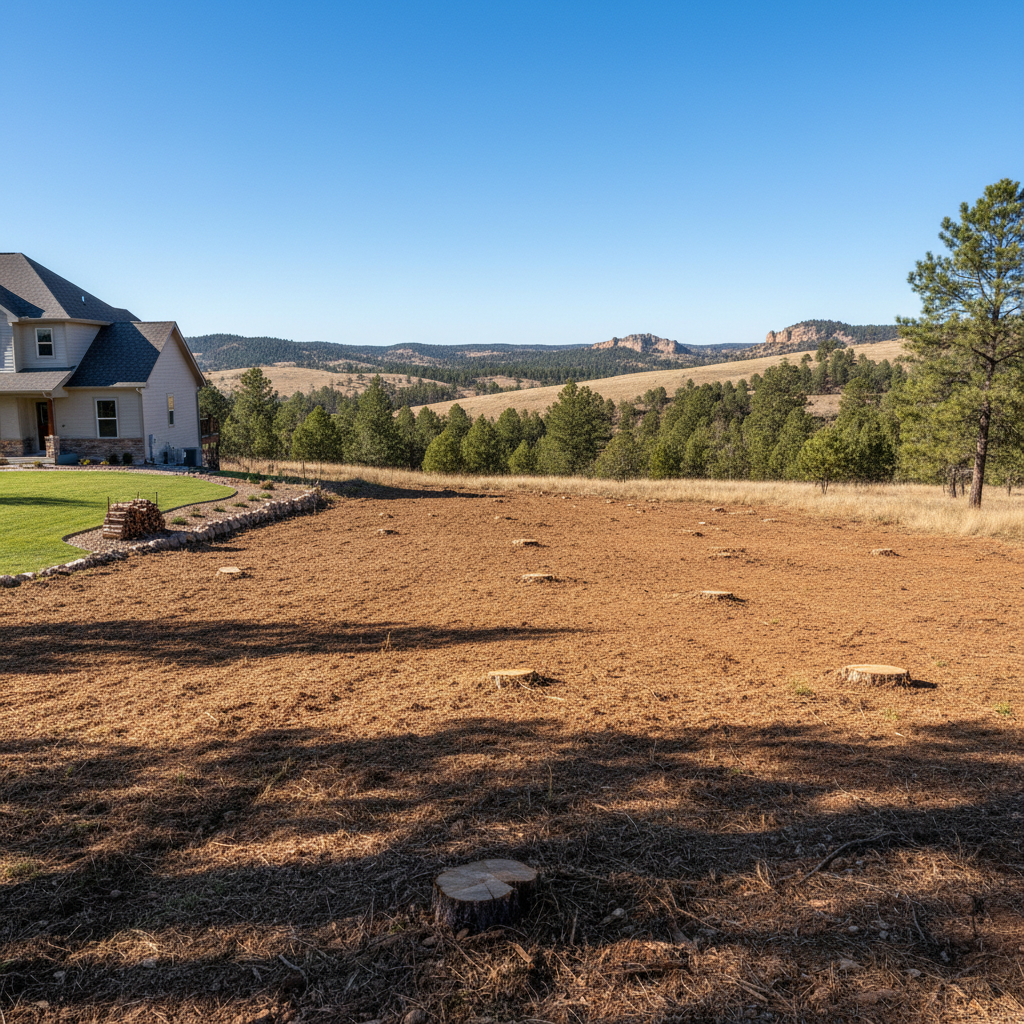
Clearing trees and brush off a piece of property takes serious effort. Whether you opened up a new building site or reclaimed an overgrown section of your yard near the Hills, the work does not end when the heavy equipment leaves. Here in Hot Springs, SD, our dry winds, intense summer sun, and sporadic heavy downpours mean that newly exposed soil needs immediate attention if you want to keep your land stable.
Stop Erosion Before It Starts
When you strip away root systems and underbrush, the ground loses its natural anchor. Fall River County winds and sudden spring thunderstorms can wash away your topsoil before you even realize what is happening. New Look Tree always tells property owners that ground cover is everything right after a clearing project. Throwing down native grass seed or laying down straw wattles on steeper slopes will save you from watching your yard slide downhill.
Managing Aggressive Regrowth
Nature hates a vacuum. Within weeks of clearing, you will notice aggressive volunteer weeds and fast-growing brush trying to take over the bare spots. If you let them get ahead, you will be right back where you started.
- Walk your property line monthly to spot new saplings.
- Mow or weed-whip open areas before unwanted growth seeds out.
- Target invasive weeds early while the roots are shallow.
Signs Your Land Needs Professional Attention
Sometimes routine property upkeep turns into a bigger headache than a homeowner can handle with a weekend weed eater. If you see deep ruts forming after a heavy rain, or if dense brush is creeping back faster than you can keep up with it, it is time to bring in backup. Stubborn root sprouts from cleared trees can also create a tangled mess that requires professional mulching equipment to truly knock back for good.
Keeping a cleared lot looking sharp takes consistency, but getting ahead of erosion and secondary growth early makes all the difference.